The Case for Reviving Craftsmanship in the AI Era
AI is not killing creativity; it is exposing how misaligned our creative labor system has been and why we need to revive craftsmanship as a first-class value in the digital age. For too long, the American creative industry has run on this quiet but pervasive myth that everyone in the room should be a “visionary, a salesperson, a front-facing entity,” constantly ideating, strategizing, and reinventing. It sounds empowering, but in reality it has devalued execution, drained entire strata of workers, and watered down the overall quality of what gets made. I cannot tell you how many burnt-out Art Directors I have met who were practically catatonic by the ends of their careers, far too early for so many.
The Weight of Ideation
The rise of AI throws this distortion into sharp view. When a system can generate a hundred pretty good concepts in seconds, you begin to see that we were asking many people to carry conceptual responsibilities they never wanted, were never trained for, and do not naturally excel at. Ideation at a high level is not just “having ideas.” It is a rare cognitive profile that blends research discipline, pattern recognition, taste, intuition, and the ability to hold complex systems, technical constraints, and cross-platform processes in mind.
Not everyone wants that pressure, and not everyone should be forced into it. Yet many roles were gradually inflated into mini–creative director or quasi-managerial positions, where the expectation was to bring big ideas on top of doing the actual work. What happened to just becoming really good at the thing you excel at?
The Quiet Class of Craft
Parallel to this, there has always been a class of professionals who thrive as high-skill craftsmen: illustrators, production artists, typographers, motion designers, animators, retouchers, front-end implementers, backend engineers, systems architects, DevOps engineers — all the people who translate vision into precise, shippable artifacts and maintain the structures those artifacts depend on. In digital and AI systems, this craft lives not only in pixels but in clean code, test coverage, infrastructure design, model alignment, and the disciplined maintenance of systems over time.
I first encountered true craftsmen at the Bureau of Engraving and Printing of all places. What I saw there felt like moving through a museum where artisans worked on modern-day masterpieces. I remember feeling honored just to be in the same room — a goal to aspire to.
These individuals prefer clarity over conceptual chaos. They do not want ten stakeholders rewriting the brief mid-week. They want a strong direction and the space to execute with excellence. They take direction beautifully, they safeguard quality, and they carry deep technical knowledge of tools, formats, platforms, and constraints.
The tragedy is that the industry, at large, has slowly shifted toward undervaluing true craft — in money, in culture, and in status — because it bought into the idea that you are only “creative” if you are shaping the concept and the bottom line.
When Mid Becomes Cheap
AI flips that logic. When “mid design” — generic layouts, derivative illustration styles, passable social graphics — becomes cheap and abundant (Canva, anybody?), its perceived value collapses.
And to be clear: this is not a dig at Canva users. Canva actually industrialized templated design and made it accessible — and that democratization had value. The issue is that it also normalized a visual economy built on sameness, shortcuts, and output detached from underlying structure. The platform teaches taste-lite composition, not actual system thinking.
So when AI enters the scene and generates the same kind of templated mid-tier content at an even cheaper cognitive cost, it makes something very clear: what rises in value are the things AI cannot easily fake — real craft, precision, technical mastery, and human refinement.
Anyone can press a button and get a moodboard. Very few people can build a coherent visual system, debug edge cases across platforms, or polish a motion piece until it feels effortless and inevitable. The more the surface layer is automated, the more the underlying structure and finish matter.
Real knowledge lives behind the scenes.
Image Versus Asset
This is where a critical but neglected distinction emerges:
the difference between an image and an asset.
AI tools are exceptional at producing images — beautiful, surprising, shareable artifacts. But in professional practice, what teams actually need are modification-ready assets: layered, editable source files that can be versioned, localized, adapted, and reflowed months later without rebuilding from scratch.
A social campaign, for example, is not just a handful of JPEGs. It is a system of templates, typographic rules, spacing hierarchies, export presets, and platform-specific variations. If you cannot open it, edit it, and reflow it without a full restart, you do not have an asset. You have a poster taped to a wall — and in low resolution at that.
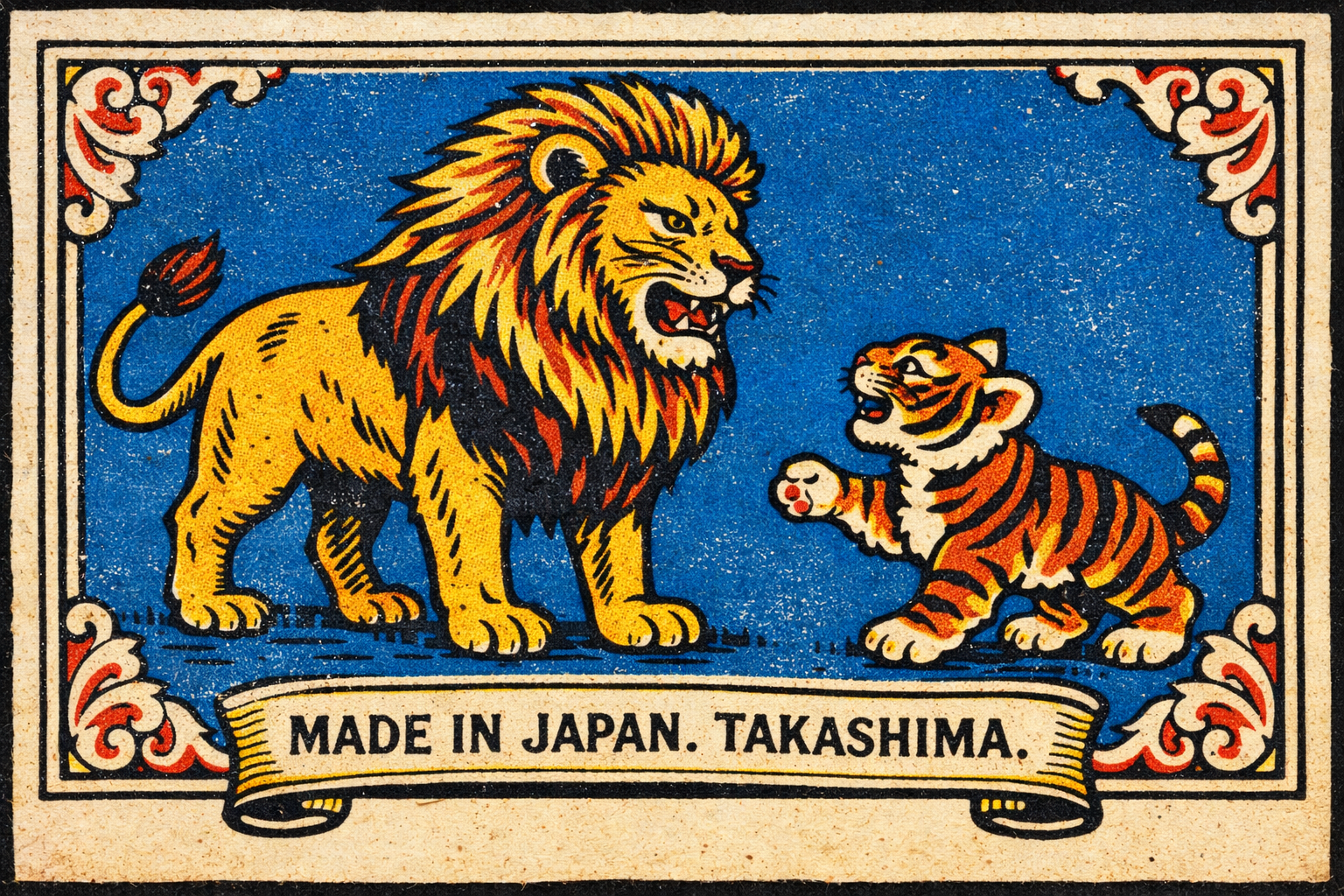
A reverse-engineered non-asset.
The Architecture of Files
Most general-purpose image generators still output flattened raster files — visually striking, but structurally hollow. Skilled designers must rebuild the underlying system for professional use.
A new generation of tools is emerging (text-to-PSD, prompt-to-SVG, prompt-to-Figma), but even when layers or vectors are present, they require human craftsmanship: naming, ordering, grouping, cleaning, enforcing brand tokens, and integrating outputs into larger design ecosystems.
What matters is not “can the AI spit out layers?”
It’s: does the file behave like something a real team can build on?
And that is still deeply human work.
The Discipline of Making
Seen this way, file hygiene and structural rigor are not “back-office chores.” They are the backbone of execution.
A disciplined digital craftsman — and eventually a master digital craftsman — who maintains hierarchies, reusable styles, clean tokens, and consistent exports is not less creative than the person who wrote the first concept line. They are performing a different kind of creative labor: shaping the medium so that ideas can live, evolve, and scale.
When teams treat this as low-status labor, they undermine their ability to adapt. When they honor it, they build systems that are resilient, transferable, and future-friendly instead of fragile.
Mastery Revealed
AI, paradoxically, can help restore honesty and dignity to these distinctions. It makes conceptual noise cheap — endless alternative directions, mashups, riffs, and synthetic remixes appear instantly, without the rigor of genuine creative thinking.
This forces teams to confront the questions they used to avoid:
Who is responsible for vision, not just aesthetics?
Who is responsible for turning vision into a system that can be maintained over time?
Where does the real value of our work reside — in the spark, the structure, or the polish?
And most of all, where has mastery gone?
Two Paths, One Honor
The answer is not to collapse everything into the notion that “everyone is a visionary now.” The advice we hear from every mentor, leader, and teacher is always the same: find your voice.
The real work is to embrace a clearer division of roles — without moral hierarchy.
Conceptual roles:
strategy, narrative framing, system design, and the stewardship of taste and vision across products and campaigns.Craft roles:
execution, refinement, technical mastery, file structure, implementation detail, and the guardianship of quality at the pixel, frame, and line level.
I return often to my first job, working beside Jim, the production manager. He was a father figure, mentor, teacher, and advocate. What he taught me in those early years exceeded anything I learned in four years at a nationally recognized art college. He taught me respect for craft — how to build things that last — and the quiet mastery behind good work. Jim had an equal seat at the table.
Cultures of Real Work
Neither path is superior. Both are demanding and both deserve status, pay, and respect.
Some people are wired to live in ambiguity — to generate and kill ideas, to continuously reframe problems. Others are wired to bring order to chaos — to perfect edges, to catch the flaw at 200% zoom that nobody notices but everyone feels.
Healthy teams do not force one group to become the other. They design their orgs, rituals, and processes so each can go deep.
In practical terms, that means shifting away from performance cultures where people are judged by how many ideas they pitch, how many meetings they charm, or how many concepts get approved — toward cultures where people are judged by the quality and reliability of what they create.
It means writing job descriptions that honor craft as a long-term track, not a stepping stone to “strategy.” It means giving production designers, implementers, and quiet craftspeople a real voice in tooling decisions because they understand where AI helps and where it breaks things.
And if we are setting standards for AI-assisted work, the rule is simple: if it does not produce modification-ready assets and coherent systems, it is not done.
The Return of Craft
Just as industrialization set off the long arc that eventually revived our appetite for artisanal food, handmade goods, and slow craft, we all remember the Williamsburg era — the rediscovery of analog living, heritage techniques, and small-batch everything. The AI era is poised to revive the prestige of digital craftsmanship in the same way.
Directors will direct.
Craftsmen will craft.
And the value will sit not in the ego of claiming vision, but in the integrity of the work itself — its usability, adaptability, and longevity. The more we let people commit deeply to the roles they are suited for, without shame or status anxiety, the better our creative output becomes.
The Opportunity Before Us
AI is not replacing creatives. It is stripping away the illusion that all creative labor is the same. It forces us to see the difference between an idea and a system, between an image and an asset, between a performance of creativity and the quiet discipline of making things that last.
In doing so, it reveals where real mastery lives — and invites us to rebuild our industry around it.